Thursday, March 31, 2011

BRING IT ON!

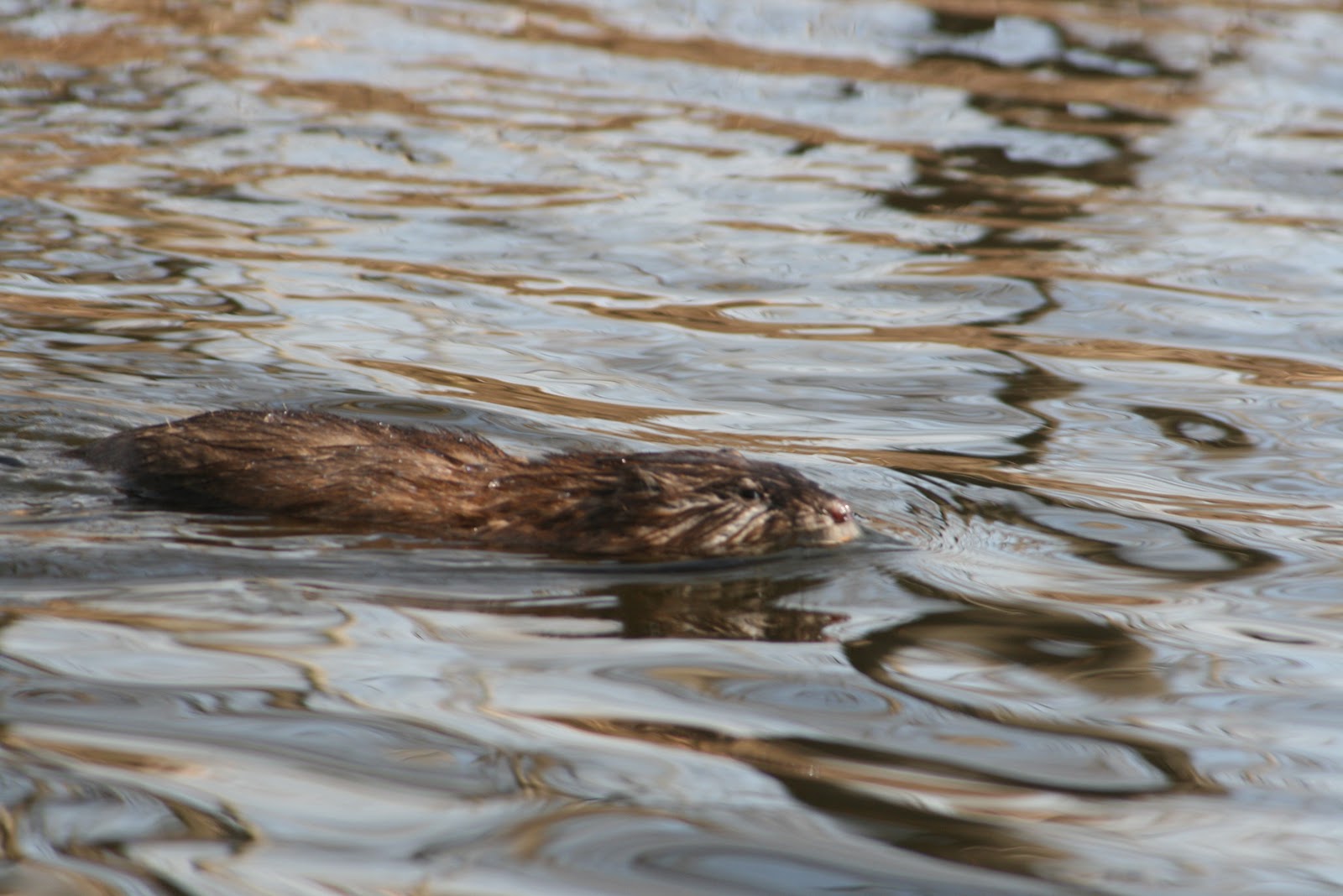
So the cute furry beaver was now the big bad enemy. (See entry for March 30.) He was eyeing the woods, and he was getting a little cheeky with the tail slapping, too. We called Trapper Ben.

WANTED!
“Do not kill the beaver. Do not hurt the beaver. Just relocate the beaver where it will be happy.”

Trapper Ben was on board with all of this, but he didn’t own a live trap big enough for this dude. We had to buy one. Guess the price.

Did you guess $450? I looked at my checkbook and pondered that beaver’s life. I looked at the woods. I bit the bullet.

The trap was huge and heavy. Trapper Ben set it out with some tasty treats that appeal to beavers––corn leaves, carrots. He knew right where to put it vis-à-vis the lodge and the pile-o-scat. So we waited. And waited. We met with Trapper Ben and affirmed our desire to live-trap the animal. He knew all about the satellite dens cut into the pond bank under water. That’s where beavers house their yearlings while they raise the new batch. He rerouted the pond run-off pipe because running water sends a message to beavers, and its beaver brain responds, “Damn! I must build a dam!”

The food remained in the trap. The trap remained unsprung. The lodge grew into the Mackinaw Hotel. There were more stumps in the woods. The summer was drawing to a close. When I kayaked around the colossus, I could hear baby beavers squealing and mewing in the lodge. Awwwww. Awwww, my foot! We were about to host lots more beavers!


By September, we were growing weary of the battle. One day I was walking around the pond and found that a beautiful, tall oak had been felled. It was likely 50 years old. I called Ben.

There was a knock, I opened the front door, and Ben stood on the front porch.

“Kill the little bugger! Kill them all!” I shouted. I waited for the regret. And right on cue, there it was––I regretted paying $450 for a trap! Nope, the pelts in summer aren’t useful. I read your mind.


And kill the buggers he did. I asked him not to show them to me; I felt bad enough. They were big, he reported, as in 60 lbs. of big. And numerous.

Finally, I had to look. Did I feel bad? Yeah, a little, even though I had done everything I could to give those guys a chance. But beavers reproduce like the rodents they are, while it takes a tree somwhere in the neighborhood of 50 years to become 50 years old.

Ben dismantled the lodge so it wouldn’t be colonized by future beavers. It took him all day, and apparently it wasn’t an easy task. Ben looked like he had wrestled those beavers out of there by hand. The lodge was impressive. There were three levels, and each level had two doors of its own. Okay, so then I felt a little bad. They are amazing beasts. They will be just as amazing over on the English River when they can't get through our new fence below the pond.

Tree Killer!


To see a wonderful video on beavers building a lodge:

http://www.youtube.com/watch?v=VuMRDZbrdXc

Wednesday, March 30, 2011

TIPPING POINT

Each year, without fail, we have one special guest, some sort of beast we’ve never seen before. It becomes our focus as we learn about it and enjoy observing it. One year we had an orchid in the woods, but just that once. One summer we had the Green Herons. (See March 17-20.) Before that we were inundated with dragonflies of every kind and color. I’d never spotted a warbler, then two years ago a flock took up residence beyond the pond.

 Last spring we hit the jackpot. There was evidence of a beaver in our pond, and I’d never seen them at work. I was excited.

Because the water was so high last year, small trees that once had been around the pond were now in the pond. They were about a yard or two from shore. Some of those trees, which would rot anyway, had been downed by a beaver, leaving a field of freshly sharpened pencils sticking up out of the water. A tall tree would be down on the water one day and gone the next.


The beaver was taking these logs to a small island at one end of the pond. In dry years, the island is part of the shore; in wet years, it becomes isolated. It’s a big mound of earth with several huge trees and some underbrush. The beaver, working efficiently, simply added logs to the island rather than starting a lodge from the ground up. I watched day after day as our drowning willows and poplars disappeared, and the lodge took on surprising proportions.


Take a whiff––this is my place!


How cool is it to see a beaver lodge built right before your eyes? And without losing any trees from our woods at that. These guys were cleaning up our pond––that was a bonus. Excessive dead trees and leaves are not good for pond water.

I did catch a few glimpses of the beaver. Once he let me drift quite close to him. When I pushed my luck, he dove down, and I saw him disappear under the island. At times like that, I cannot imagine living in the city.


Then one morning I spotted something a couple of yards up the hill in the woods. It was the pointy stump of a large tree. Not a little tree. Not a tree in the water that was going to die anyway. There were still trees in the pond the beaver could have harvested, but he had gotten greedy. He’d taken down a beautiful, viable tree.

At that moment, 


Interesting, cute, industrious beaver 

became 

Evil, destructive enemy of the people. 

War was declared.

Tomorrow: Bring it on!

Tuesday, March 29, 2011

ack ack ack ack ack ack ack     PARSNIPS   ack ack ack ack ack ack ack

Remember parsnips, those nasty, acrid wanna-be carrots that sit on your uvula and repeatedly kick you in the gag reflex? When my mother said I had to sit at the table until I ate all of my parsnips, there was only one reasonable response. “Then this is where I’ll grow up.”  Well, it turns out there’s something even worse than parsnips! There are attack parsnips. 

Meet the Wild Parsnip, aka Pastinaca Sativa. Sounds like Silvio Berlusconi’s latest love interest, but he’d regret that liaison.

Here’s what you need to know about Wild Parsnips:

1.          You do not have one Wild Parsnip. If you have one, you have 
             thousands.
2.         You cannot kill a Wild Parsnip.
3.         A Wild Parsnip will laugh at you if you try to kill it.
4.          They disguise themselves as Queen Anne’s Lace.
5.          No matter how mad you get, you don’t want to touch them.
Ever.

Oh, you may think it’s no big deal to touch a Wild Parsnip. You grab one and say, “What’s the big deal?”  Indeed it is a big deal, a big deal called photodermatitis. 


Wild Parsnips have chemical components called furanocoumarins. (That’s probably why parsnips taste so nasty.) Furanocoumarins get all excited when hit by UV light; they are photoactivated. Touch a parsnip, let the sun shine on the spot it contacted, and that area will become red, begin to itch, and then blister. The itching will not be a problem for long; that’s because the pain that follows will make you forget about it. If you get a good exposure you can erode your skin and deeper tissues.


We have been lucky not to have invasive Mustard Garlic in our woods, but Wild Parsnips have crept across the county. They love the ditches and sunny fields.These plants start out as flat rosettes on the ground. They put up tall stems (3-4 feet high) with leaves and then multiple yellow flowers. You can dig, pull, mow, cut, burn, and spray these plants. Then you can listen to them snickering. They just call in reinforcements. Most people let them do their thing, but I have a need to eradicate parsnips of any kind. I do admit that one of the silliest things I ever uttered was, “I got them all this time!”

I guess there’s some poetic justice when The Girl Who Wouldn’t Eat Parsnips ends up being haunted by Wild Killer Parsnips for the rest of her life.


For a photo gallery of Wild Parsnips, cut and paste this ginormous address:

http://images.search.yahoo.com/images/view?back=http%3A%2F%2Fimages.search.yahoo.com%2Fsearch%2Fimages%3F_adv_prop%3Dimage%26va%3Dwild%2Bparsnips%26fr%3Daaplw&w=531&h=425&imgurl=www.wiseacre-gardens.com%2Fplants%2Fwildflower%2Fwild_parsnip_foliage.jpg&rurl=http%3A%2F%2Fwww.wiseacre-gardens.com%2Fplants%2Fwildflower%2Fparsnip_wild.html&size=139KB&name=Wild+Parsnip+-+f...&p=wild+parsnips&oid=f97531296510b13d02ab3eff29c4be81&fr2=&no=8&tt=2030&sigr=123mlvhfe&sigi=123a4dk6q&sigb=12mlku2sj&.crumb=Suv5Qbrozs7